
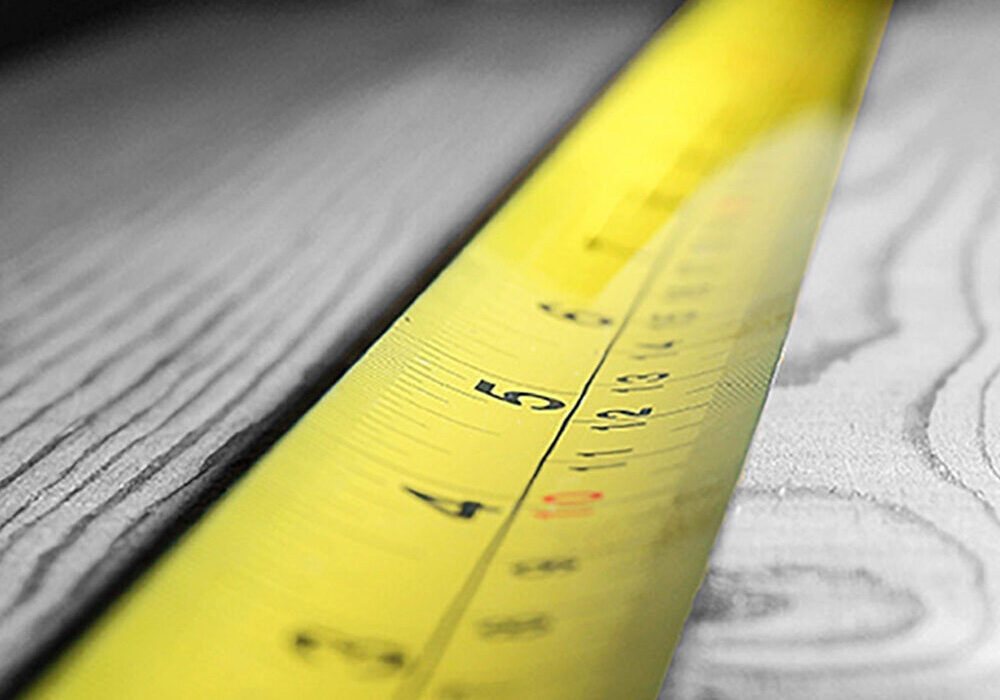
Hose measurement: From cutting to assembly
Different couplings require different measurement techniques. When measuring hose, one should always keep in mind that temperature changes in the environment affect the rubber. Temperature variations also affect the hose through the media flowing inside it. All hoses made of polymeric materials, such as rubber and plastic, react to temperature changes. Temperature changes cause the dimension of the hose to change. To prevent the hose from twisting, bending or coming loose from the coupling, it needs to have sufficient flexibility - especially when the flow changes direction or speed and the pressure varies.
The hose also has a bending radius that determines how tightly you can bend the hose before it is damaged. Here's a guide on how to measure hose length for best results. When you need flexibility under pressure, hose is your best choice.
How to measure your hose
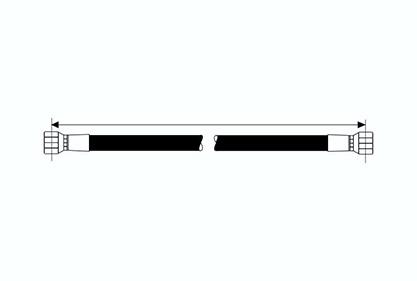
Internally threaded couplings
Measure the length between the sealing surfaces.
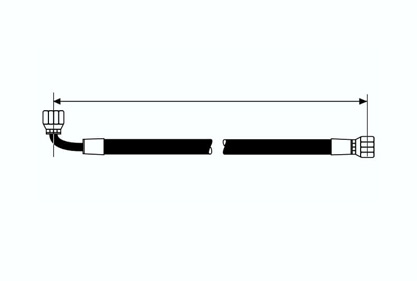
Internally threaded and 90° angle coupling
Measure the length between the angle
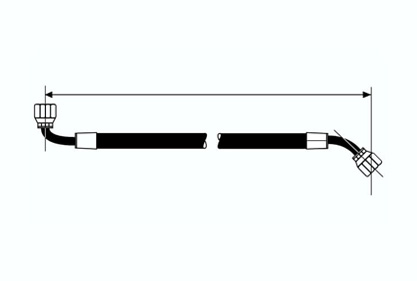
90° and 45° angle couplings
Measure the length between the C/L of the angle and the sealing surface.
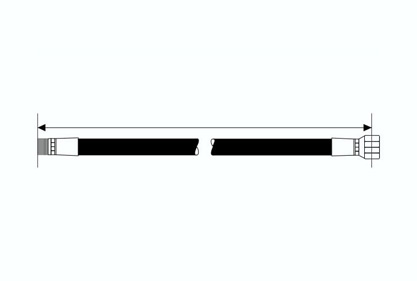
Externally and internally threaded couplings
Measure the length between the sealing surfaces.
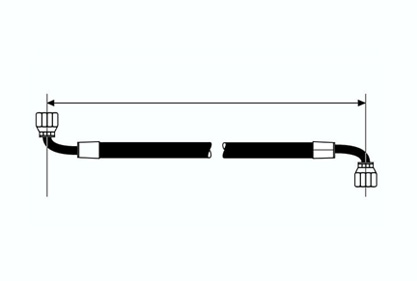
90° elbow couplings
Measure the length between angles C/L.
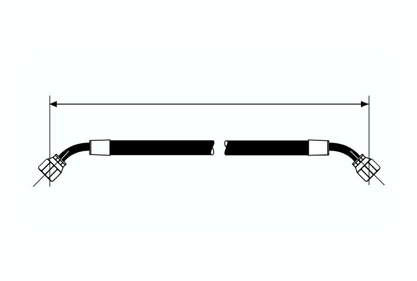
45° angle couplings
Measure the length between the C/L of the sealing surfaces.
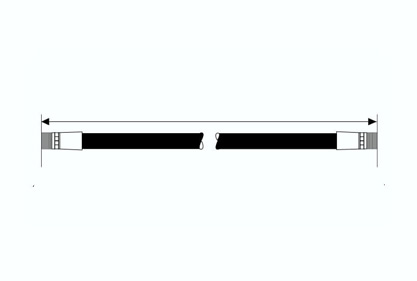
Externally threaded couplings
Measure the length between the sealing surfaces.
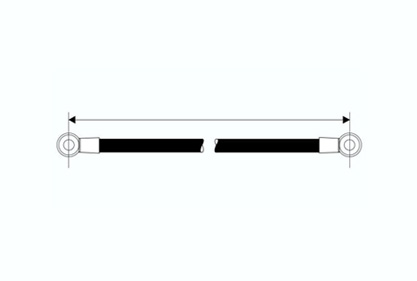
Banjo couplings
Measure the length between the holes C/L.
What is a length of hose?
The length of the hose is determined by how long the hose needs to be for the installation in question. When cutting, the hose length is measured from end to end. Sometimes you measure between the sealing surfaces and sometimes from the centerline, depending on the type of coupling you choose. Just as hoses come in many different dimensions, hose lengths also vary widely.
How to calculate the hose length?
It is important to take into account the need for flexibility of the hose when calculating the required hose length. In addition, many installations require the hose to be bent at least once. To ensure that the hose lasts as long as possible, all kinds of stresses in the material need to be avoided. The following installation examples serve as a guide for designers to calculate the correct hose length.
To avoid tension, a short length of hose at each end should be left straight, so that the bend starts some distance from the ferrule. Using the formula shown in the pictures above reduces the risk of stresses that would otherwise shorten the life of the hose.
Example of hose length calculation for fixed and mobile installation
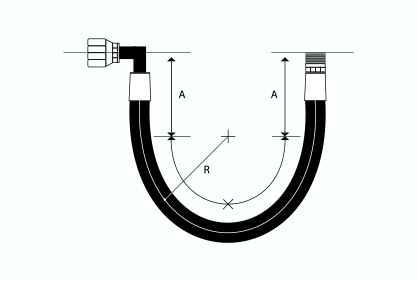
FV. FAST INSTALLATION
Length = 2A + 3.14 x 2R. Length = 2A + X
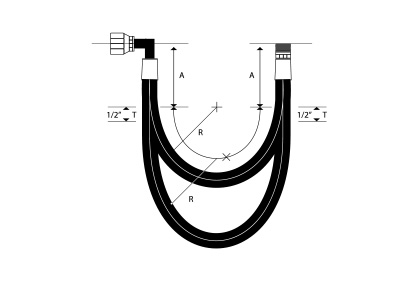
FH. MOBILE INSTALLATION
Length = 2A + X + T.
"*"indicates required fields